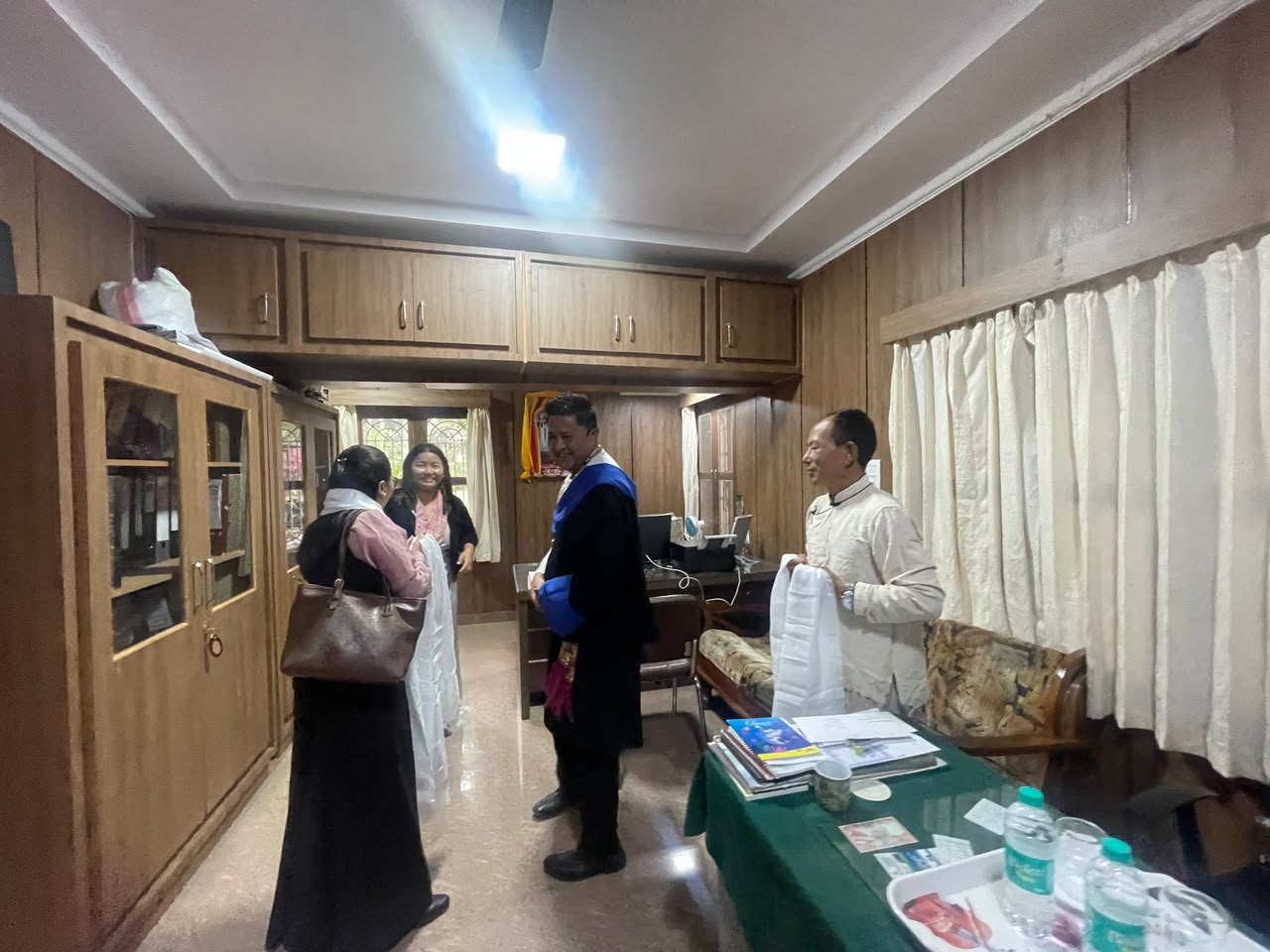
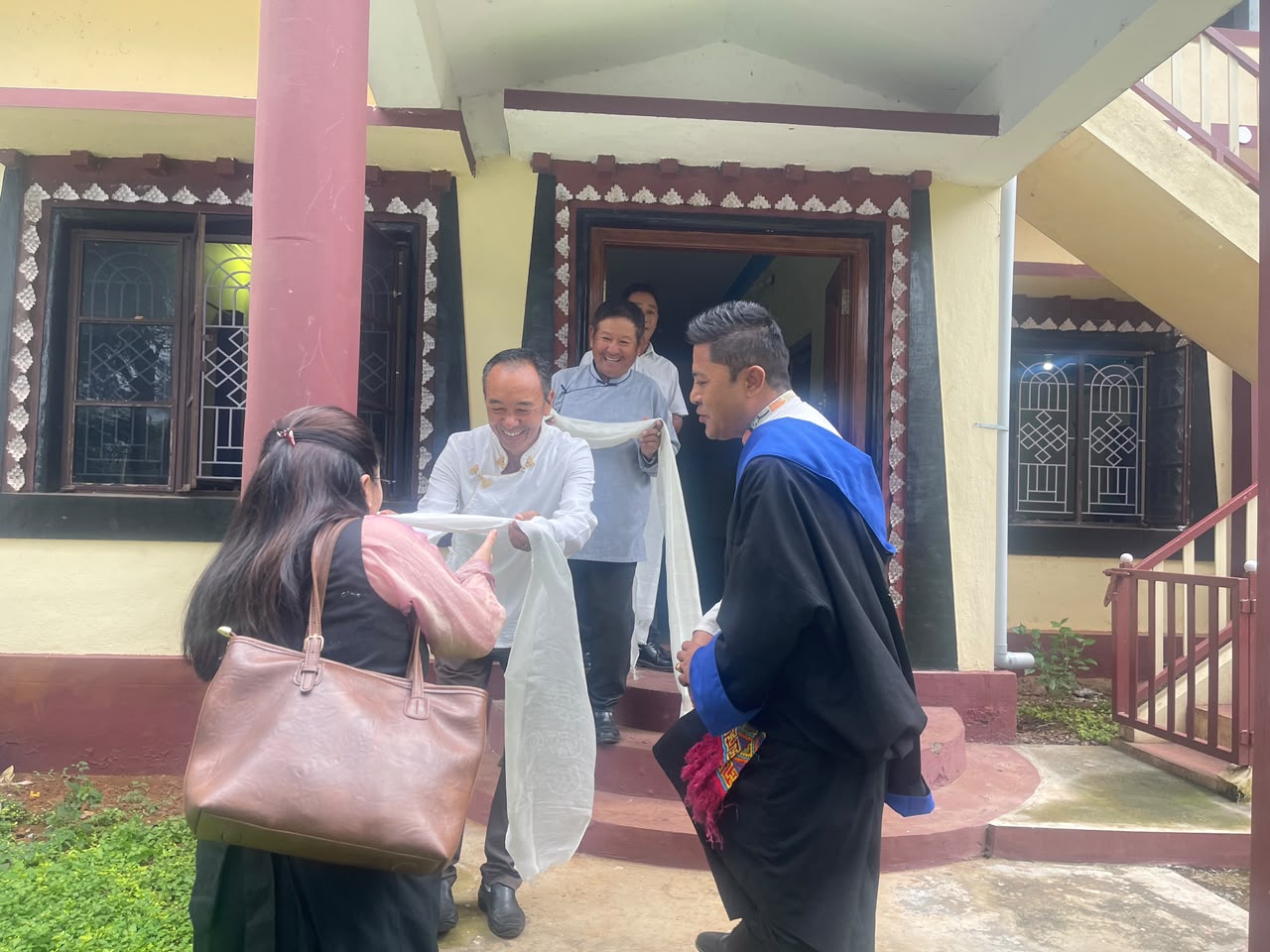
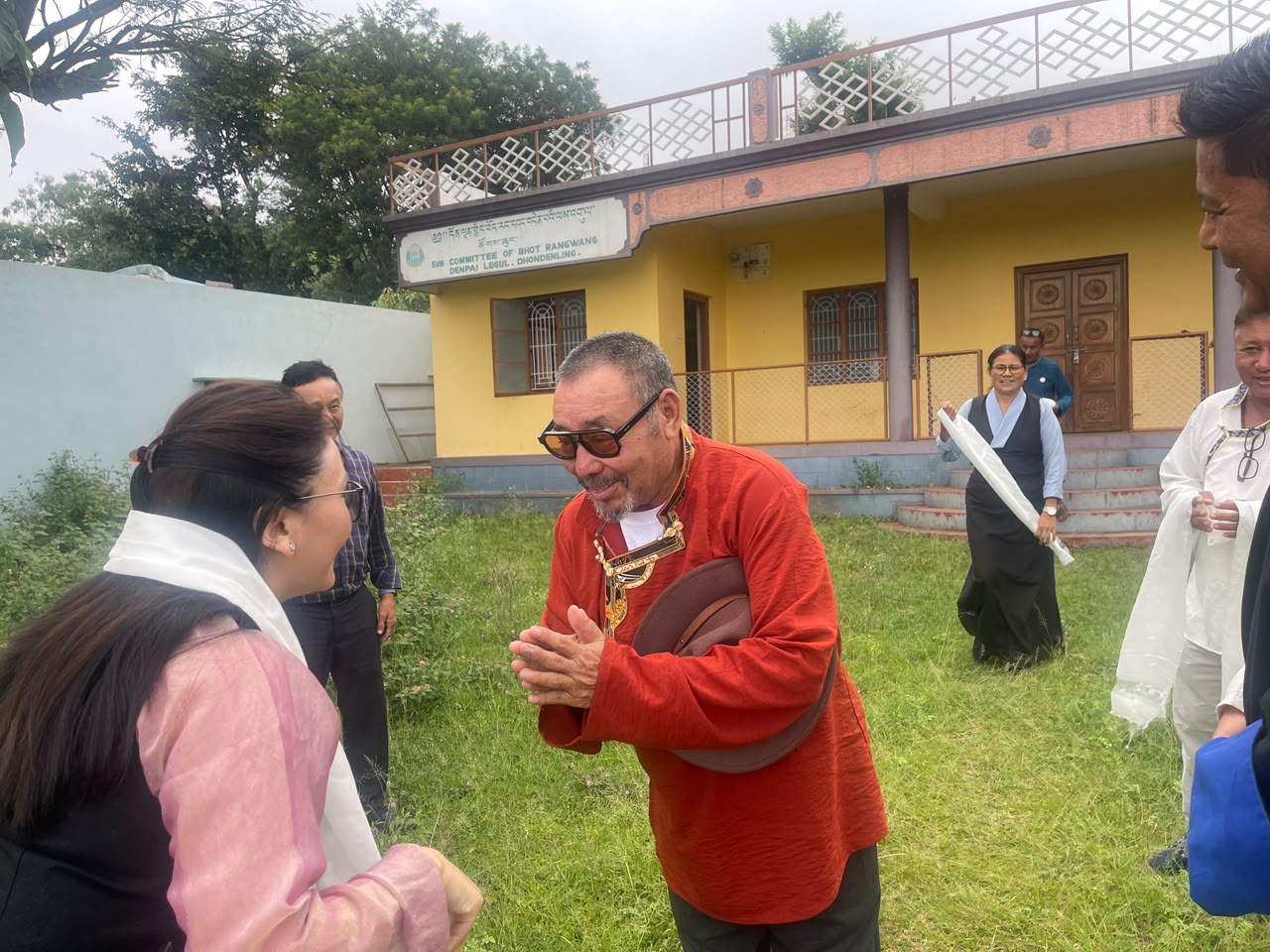
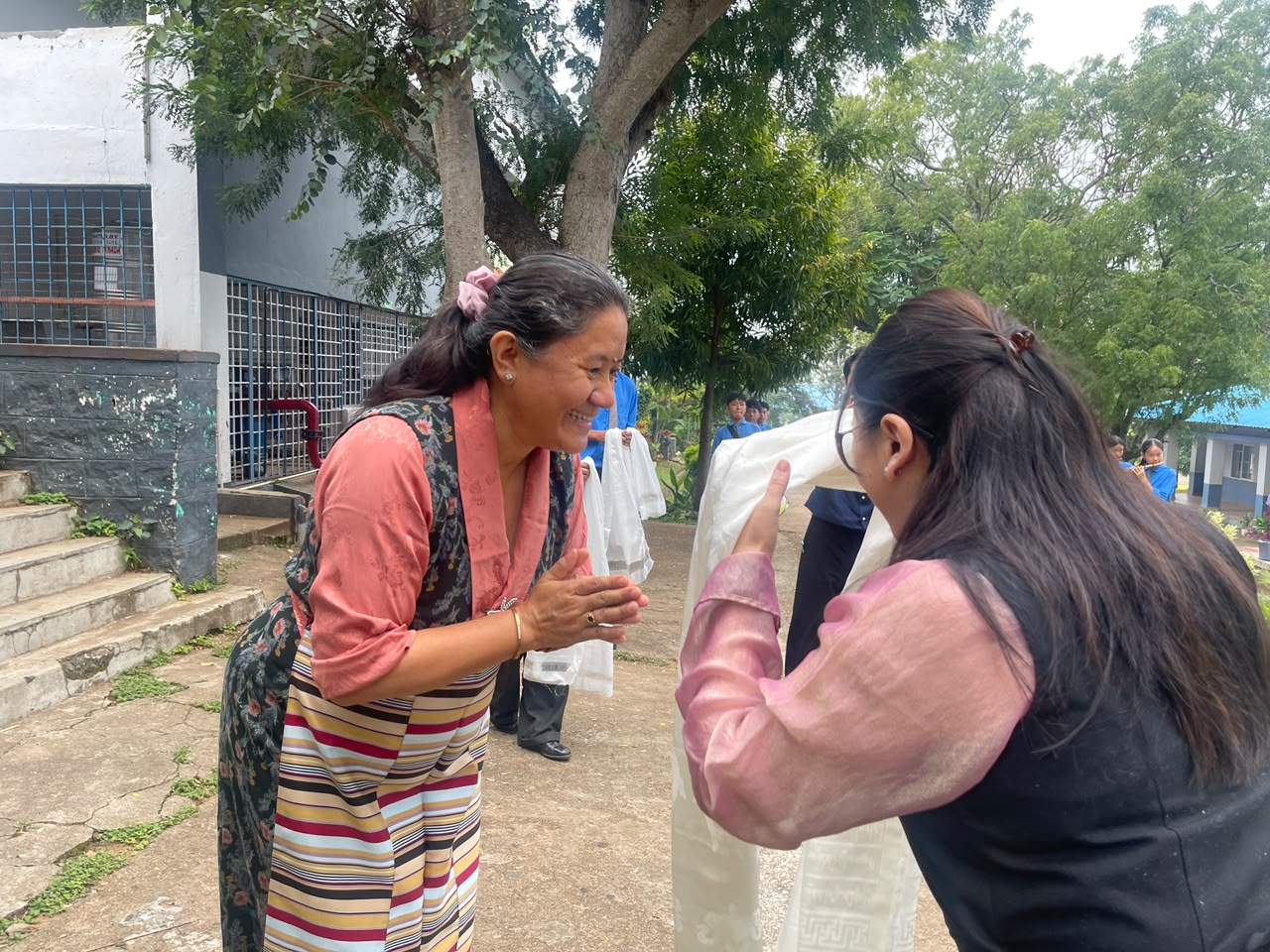
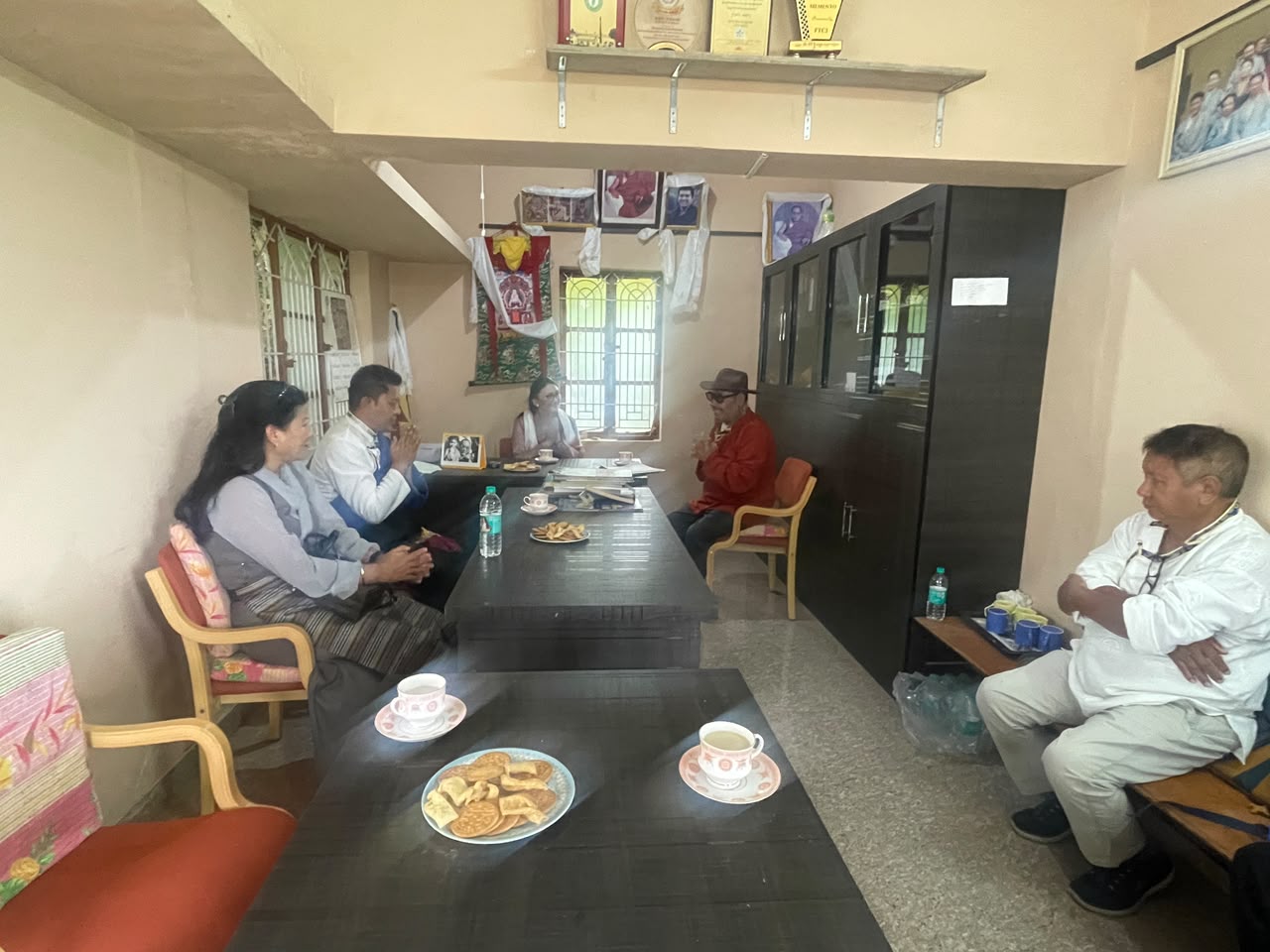
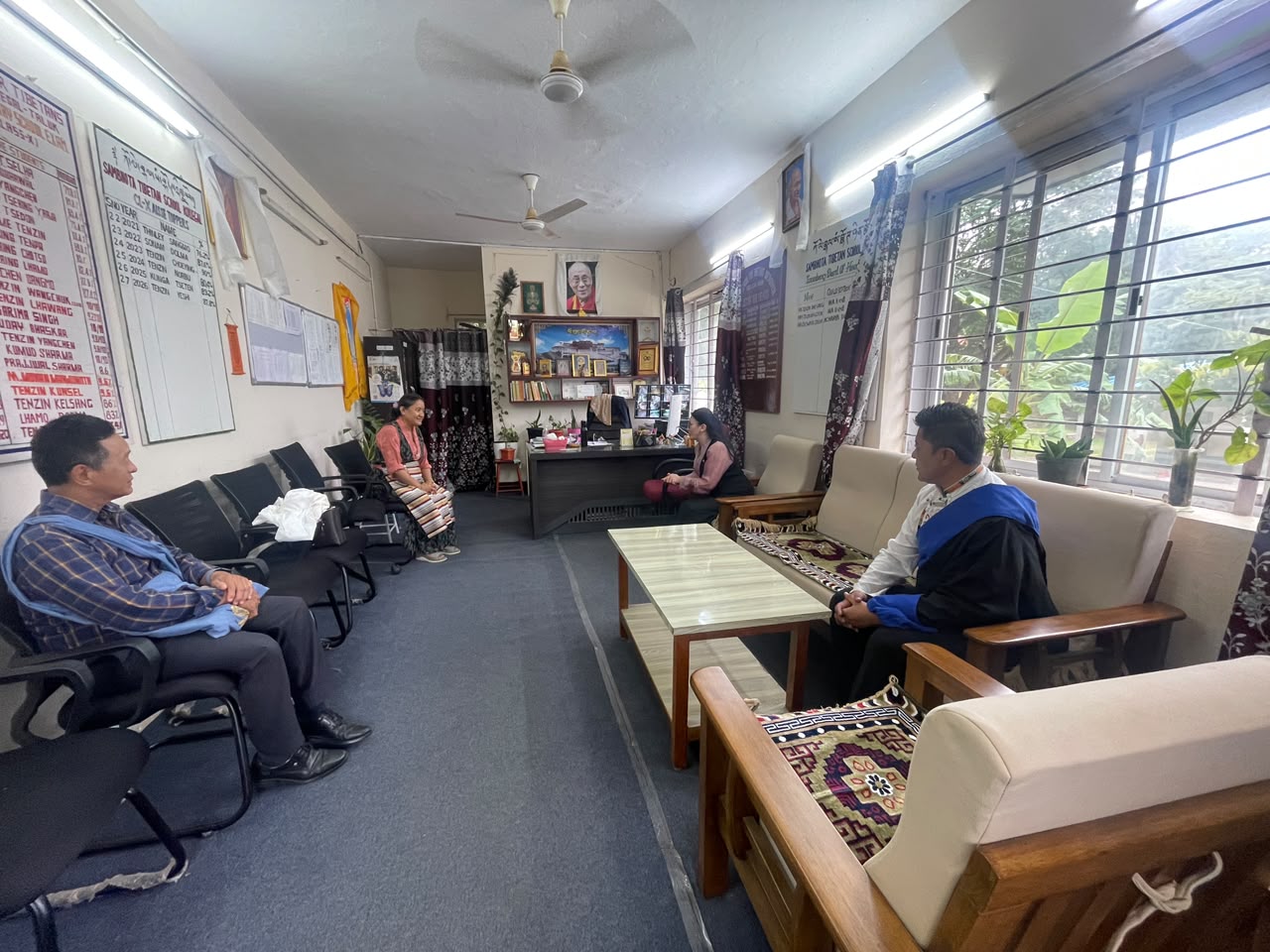
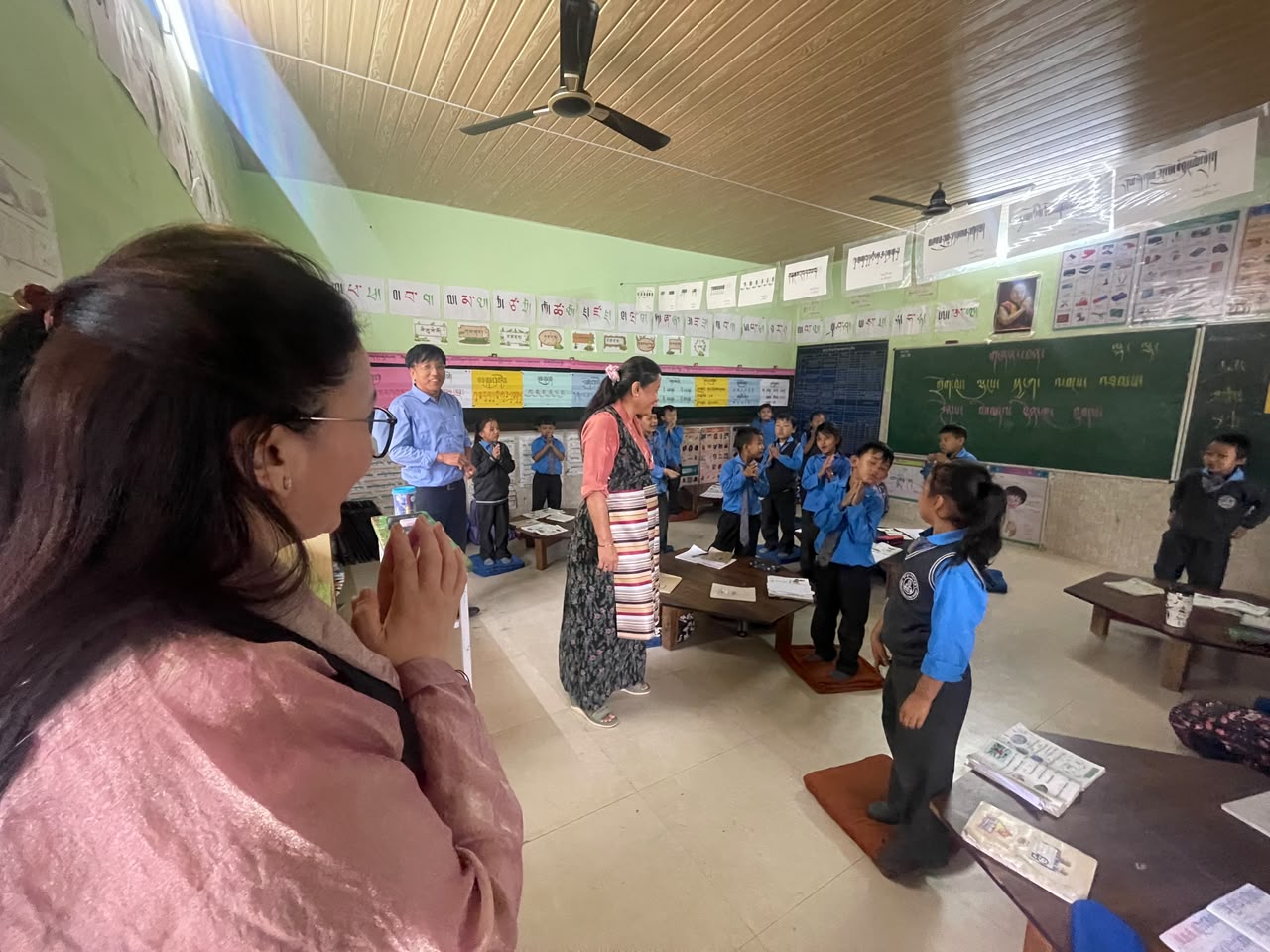
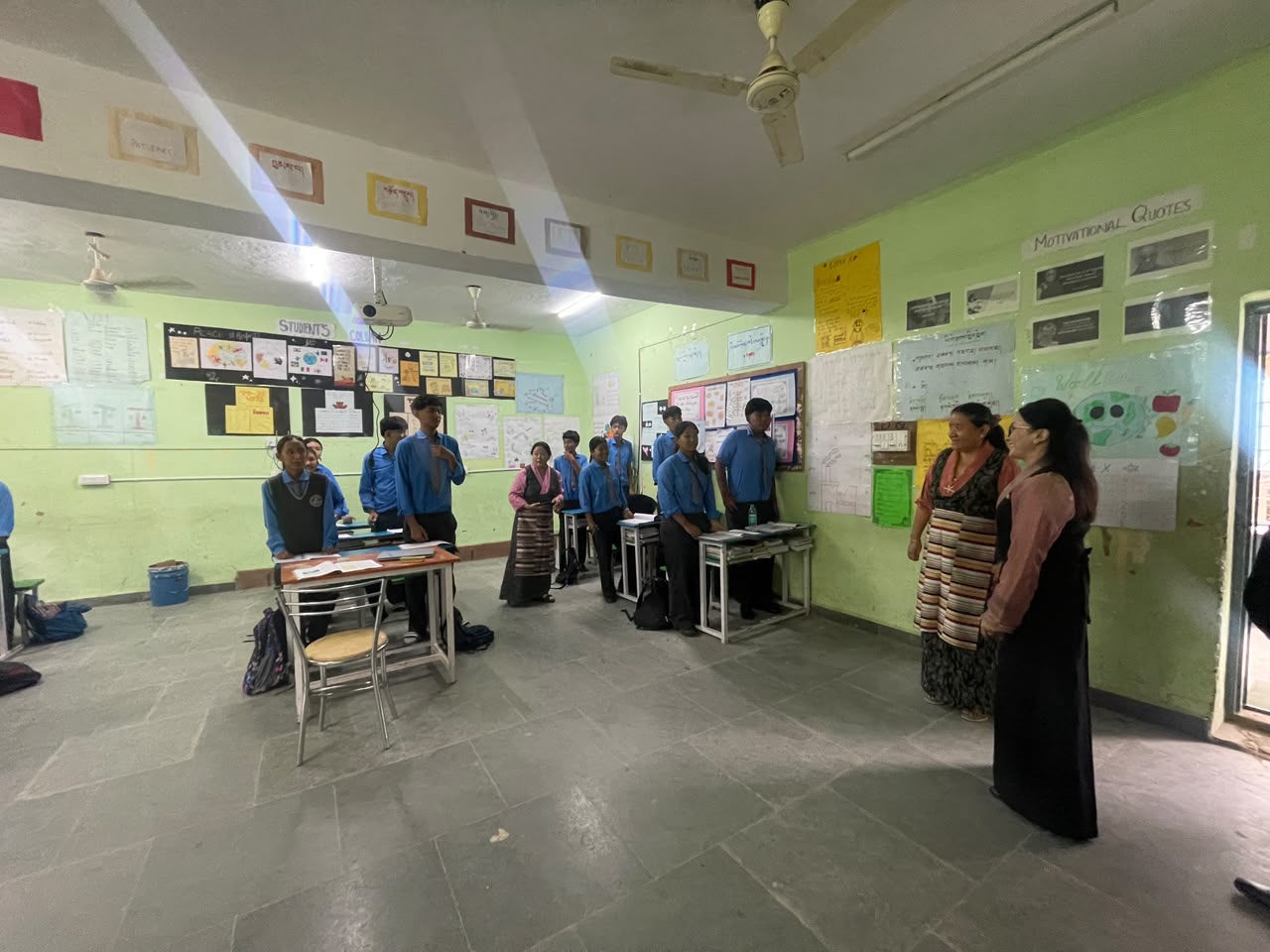
November 3, 2026 – On the third day of her official visit to the Kollegal Dhondenling Tibetan Settlement, Honorable Health Kalon (Minister) Pema Tso visited the Settlement Office, Cooperative Society, Local Tibetan Assembly Office, Regional Tibetan Freedom Movement (RTFM) office, and the Sambhota Day School. She also met with the public, delivered an address, and participated in a Q&A session with the public.
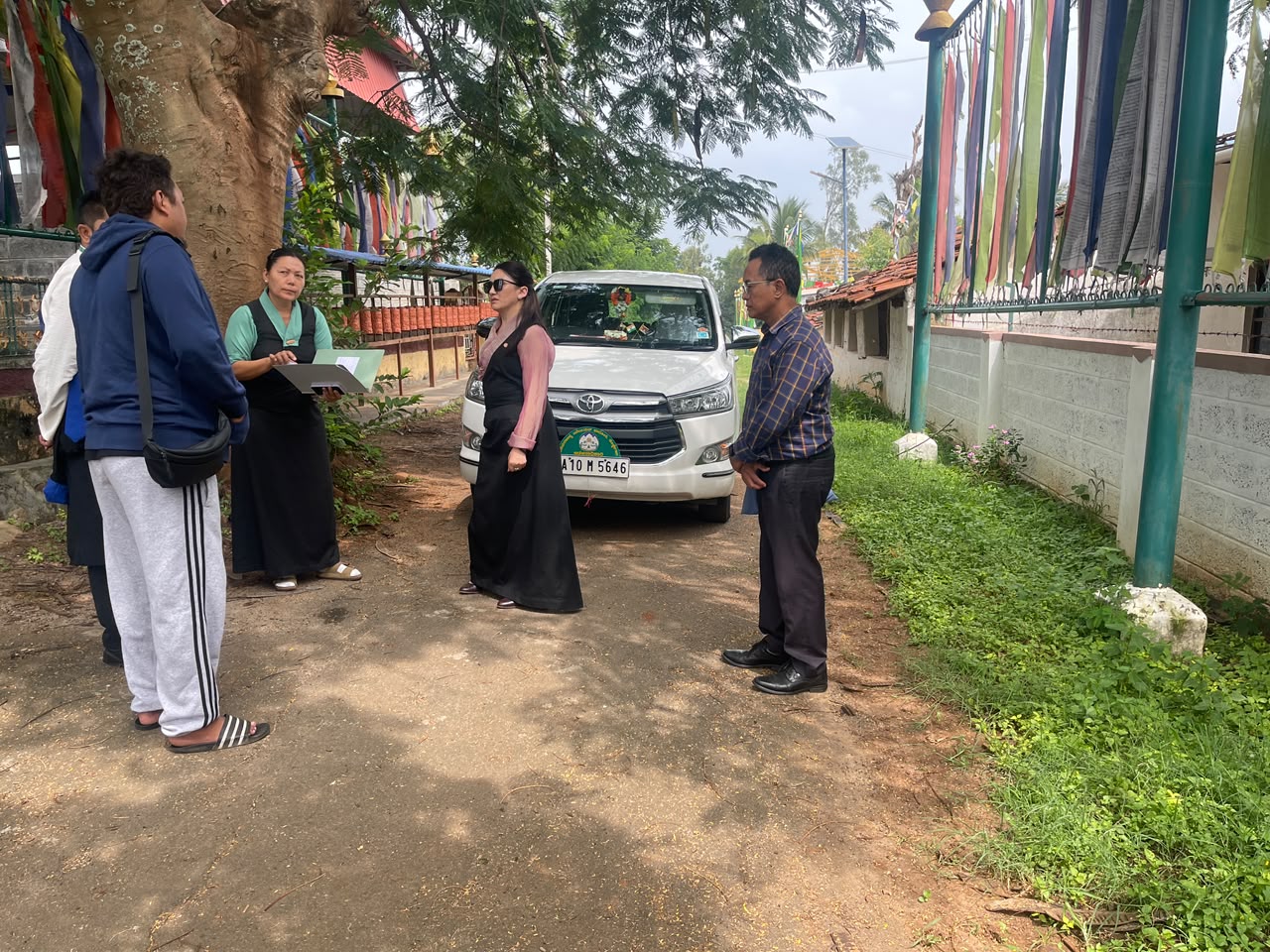
At 9:00 AM, the Kalon visited the Settlement Office to meet with the staff. Following this, she conducted inspection tours of the Cooperative Society, Local Tibetan Assembly, RTFM, and the Sambhota Day School.
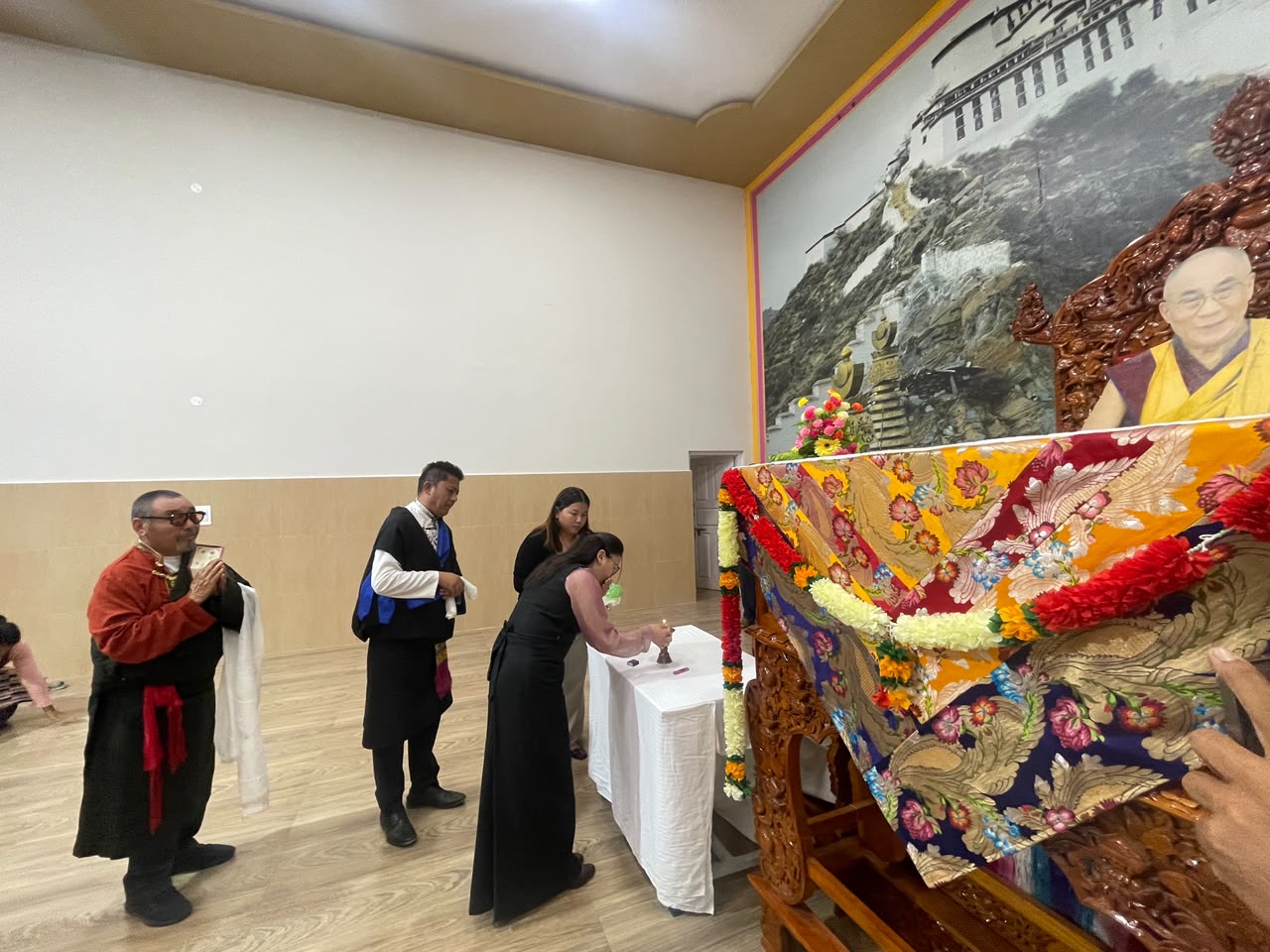
At 10:00 AM, the public meeting and address commenced at the local community hall. The event began with the Kalon offering a ceremonial scarf to the portrait of His Holiness the Dalai Lama and lighting the Butter Lamp. The Settlement Officer then read a brief biography of the Kalon and presented a status report on the settlement’s upcoming projects.
Addressing the gathering, the Kalon extended her greetings and explained that she had been unable to visit the settlement sooner because the Kashag (Cabinet) had been deeply engaged in recent months with drafting visionary documents, formulating guidelines for future operations, and revising and enacting policies and regulations concerning the Tibetan language in the exile community. She stated that she is currently touring hospitals across India to review their operational procedures, staff welfare, public service delivery, existing challenges, and future requirements.
She emphasized that the local hospital must prioritize care for the elderly living alone and young people suffering from illnesses. Acknowledging that the settlement’s current facilities and favourable conditions are the result of the hard work and kindness of the elder generation, both living and deceased, she urged everyone to remember their immense contributions. She praised the settlement for its well-established regulations, strong internal harmony, and the active role of local monasteries in introducing Buddhist philosophy to the lay community. She particularly lauded the youth for their active engagement and urged them to continue this involvement.
The Kalon commended the services provided by the local Health Clinic and the Men-Tsee-Khang (Tibetan Medical and Astro. Institute), urging them to continue their dedicated healthcare services. She also expressed her deep appreciation to the monasteries across Tibetan settlements for providing healthcare services and conducting medical tours. She appealed to all residents to cooperate to ensure the success of health initiatives, assuring them that the Department of Health will make every effort to implement projects beneficial to the public.
Highlighting the Department of Health’s focus on Water, Sanitation, and Hygiene (WASH), she advised that planning must begin immediately to prevent future water shortages. She reminded the public that their access to water facilities—amenities sometimes lacking in neighbouring local communities—is a direct result of the elder generation’s sacrifices and stressed the importance of preserving water resources for future generations. Noting the depletion of groundwater levels, she suggested submitting project proposals to the state government for rainwater harvesting initiatives.
She added that the CTA’s Department of Health has been continuously aiding for sanitation facilities and water tanks. She also provided strict guidance on the necessity of proper waste segregation and disposal, emphasizing the need for stringent regulations and firmly stating that every household must take personal responsibility for waste management.
Furthermore, the Kalon spoke about the critical situation inside Tibet, where the Chinese government is systematically eradicating the Tibetan identity through legislation disguised as promoting “ethnic unity and progress.” She stressed that Tibetans living in free countries have a fundamental duty to preserve, promote, and propagate Tibet’s religion, culture, and language, urging the younger generation to take greater ownership of their heritage.
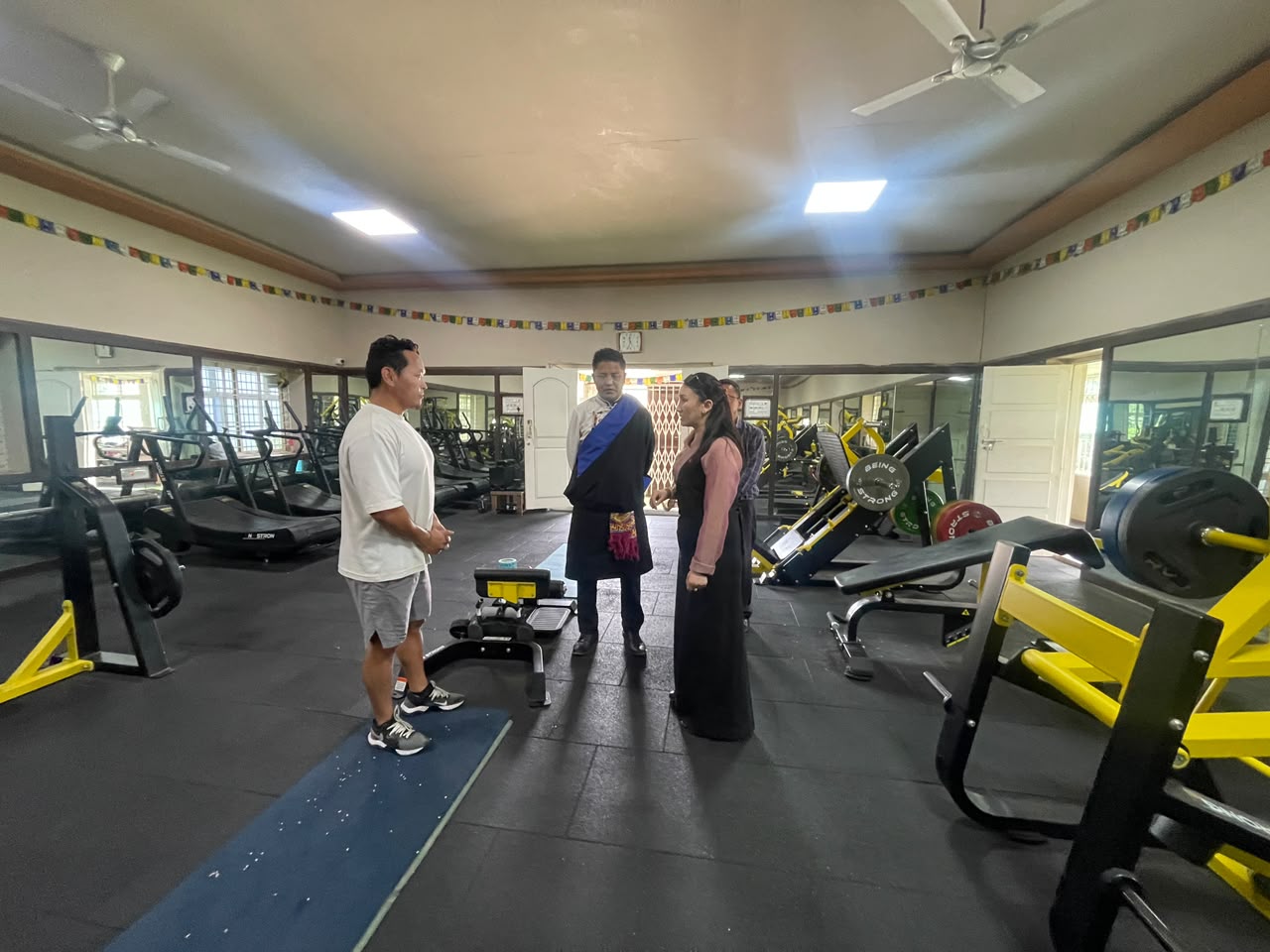
Following the conclusion of the Q&A session with the public, the Kalon inspected the local gymnasium and projects planned for the new financial year. In the afternoon, she successfully departed for the Hunsur Rabgayling Tibetan Settlement.